 Ammar Ali
Tell them what is difficult today
You do not need to arrive with a finished brief. Start with the problem. Perhaps customers cannot understand your services. The site looks dated. Your team struggles to update it. Or the business has grown and the website still describes the company you were several years ago.
A useful first conversation should help make that clearer. Who needs the website? What do they need to find? What would a useful enquiry look like? The answers should influence the pages and content, not just the colour of the buttons.
Look at the work as a customer
A portfolio is worth exploring beyond the homepage. Open a project on your phone. Find a service, read its explanation and try the contact route. Do the pages help you understand the business, or mostly ask you to admire the design?
Ask the agency why it made those choices. You will learn more from a clear explanation of one relevant project than from a long list of clients.
If you need Arabic and English, look at both. Arabic needs readable typography, a comfortable right-to-left layout and content that sounds natural. It deserves more attention than simply translating the menu.
What to look for in a real project
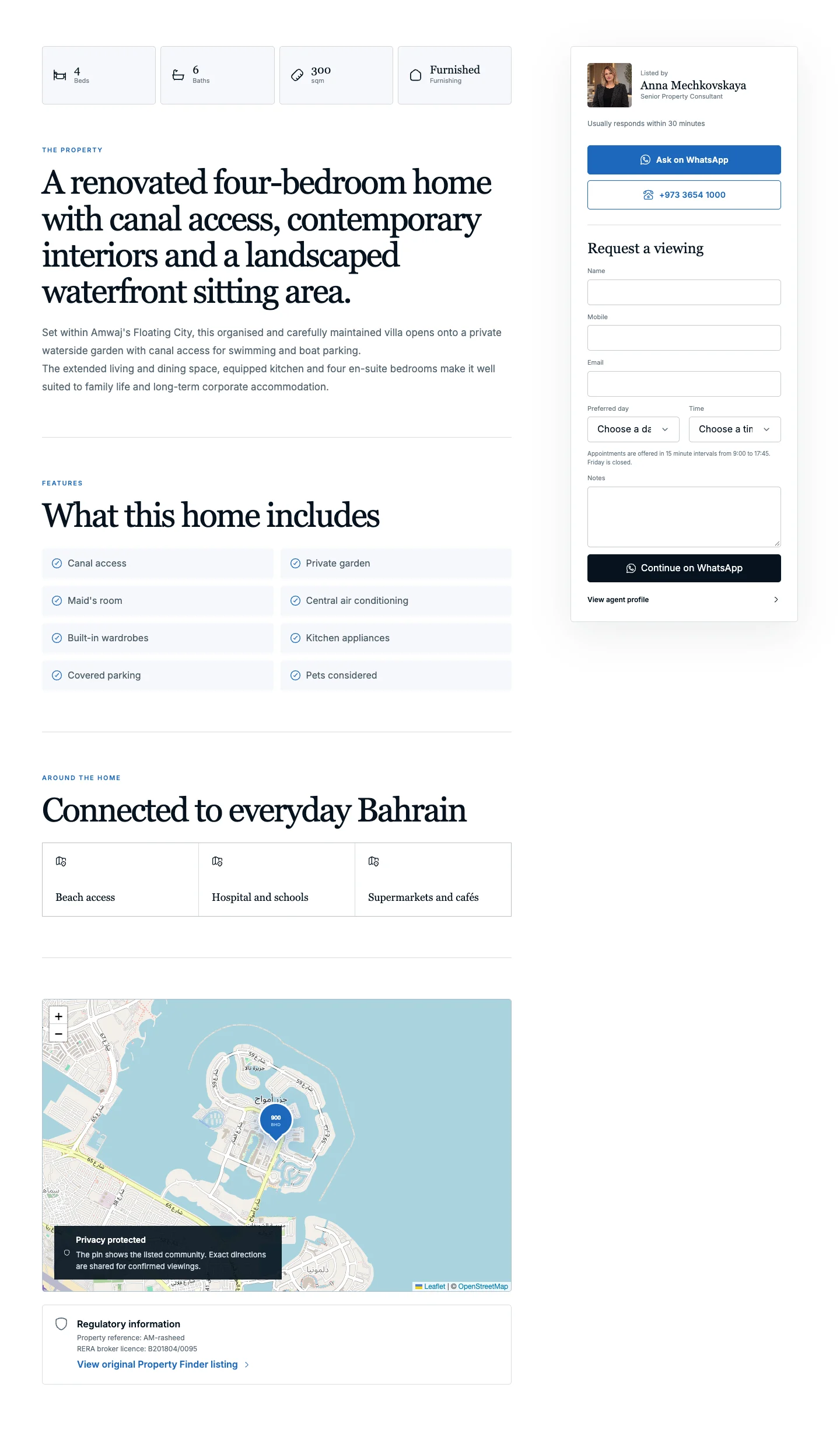
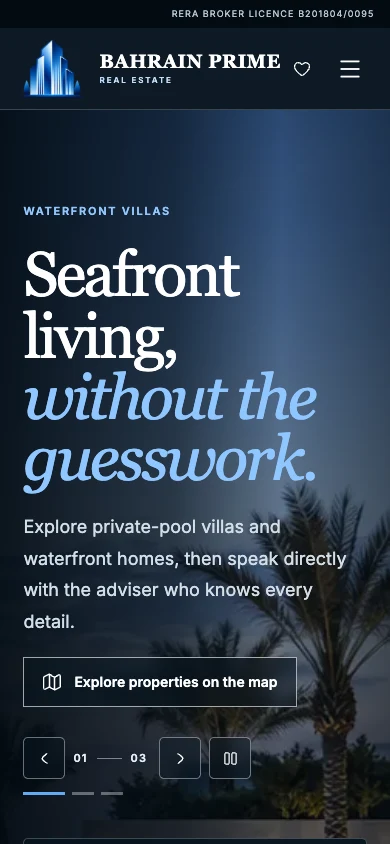
Bahrain Prime connects property browsing to a route for requesting a viewing. When reviewing a web agency’s work, follow a comparable journey on your own phone: where does the customer begin, what helps them compare options, and how do they request a viewing? That tells you more than a page count.
Review the fundamentals of Local SEO in Bahrain. See how useful website visits become real enquiries.
Agree the pages and the work behind them
Before committing, ask to see the proposed sitemap and what is included on the important pages. “Ten pages” can mean very different things depending on their content and functionality.
Clarify who writes the copy, gathers images, prepares translations and approves the final material. Ask how design feedback is handled and what testing happens before launch. If there is a booking system, catalogue or integration, describe what it must actually do.
It also helps to separate the agreed build from future ideas. A new integration may change the work significantly; a small content correction usually does not. Putting that distinction in writing makes later conversations easier for everyone.
Ask what happens to the website you already have
If you are replacing an existing site, the old pages need attention too. Ask how useful URLs, articles and search traffic will be considered, and how redirects will be handled where addresses change.
Your email also needs protecting if hosting or domain settings are being changed. A website launch should not unexpectedly interrupt the way your business communicates.
Be equally clear about ownership. The domain, website files, hosting arrangements and access to important accounts should be explained in the agreement, along with what you receive if you later move to another provider.
Understand the support before you need it
Find out how to request an update after launch, what support includes and what costs extra. Check the payment schedule and renewal terms rather than assuming everything is included indefinitely.
The same applies to SEO. Ask what the proposed work includes: page structure, titles, technical checks, content or ongoing activity. A new website is not a guarantee of a particular Google position or a fixed number of enquiries.
At MaroonDM, I prefer to settle the structure and content direction before getting too far into the build. It gives us something concrete to discuss and helps you see what you are paying for.
If you are considering a new website, email ammar@maroondm.com with your current site and what you would like to improve. We can start there.