
Start a conversation
CLIENT GUIDE · DIGITAL MARKETING

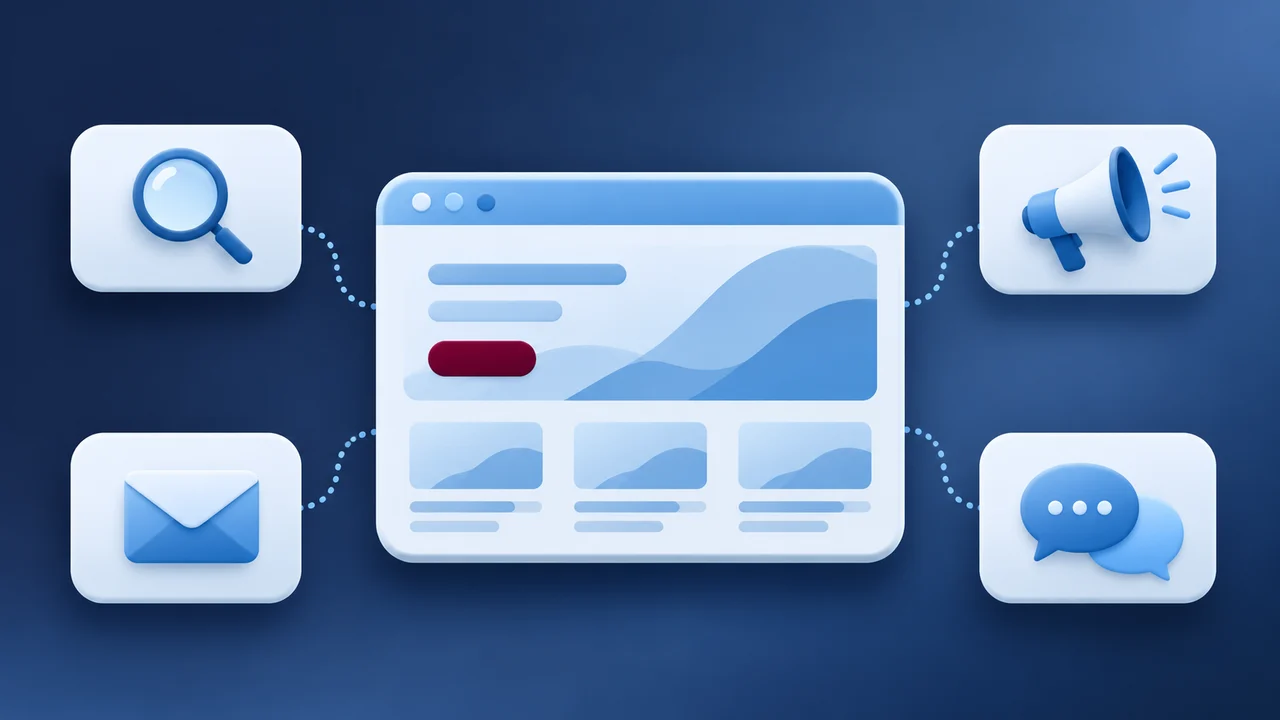
Your website is the hub.
Marketing connects the journey.

A good website gives people a clear place to understand your business and take the next step. Marketing helps the right people discover it, return to it and decide whether to contact you.

اقرأ بالعربية

https://maroondm.com/guides/website-digital-marketing/

Opens your browser’s print dialog. Choose “Save as PDF” to create a copy you can share.

One connected system, not separate tasks.

Read this as a simplified journey, not a guaranteed funnel. People may discover you several times, return later, or contact you directly from a channel.

01 · Help people discover you

  • Organic search
  • Google Business Profile
  • Social media
  • Google Ads & paid social
  • Opt-in newsletter

02 · Your website

Useful pages + clear proof + an easy next step

03 · Meaningful actions

A relevant enquiry, a call, or a voluntary newsletter sign-up

04 · Your team follows up

Qualify the enquiry, answer questions and work towards a sale.

Measure → learn → improve the content, page and campaign

A visit is not a lead. A lead is not a sale. Some actions happen on Google, social media or email without a website visit.

Start with a useful destination.

The website is your home base, not the whole marketing strategy. It should explain who you help, what you offer, why it matters and how to act. A campaign should lead to the most relevant page, not automatically the homepage.

Clarity

Service and product pages answer real questions in language your audience understands.

Confidence

Genuine case studies, helpful specifications, approved photography and clear contact details support the decision.

Usability

Fast, accessible, mobile-friendly pages and working forms make the next step easier. They do not guarantee enquiries.

Each channel has a different job.

Choose the channels your audience uses and your team can maintain. You do not need to launch all of them at once.

Organic search & SEO

Useful content and sound technical foundations help search engines understand your pages. Match a real question to a relevant answer. Visibility takes work; indexing and rankings are not guaranteed.

Example: a helpful product-selection guide links to the related product page.

Google Business Profile

For eligible businesses, accurate details, photos and genuine reviews support local discovery on Search and Maps. People can visit the site, call or request directions. Online-only businesses are not eligible.

Example: a local customer finds your profile, then opens the relevant service page.

Organic social media

Share useful ideas, project stories and people behind the business. Social posts can build familiarity and direct interested people to a deeper answer on your site.

Example: a short project post links to the complete case study.

Google Ads

Paid campaigns can put a relevant offer in front of people looking for a solution. Match the message, destination and intended action, then review the quality of the enquiries, not only clicks.

Advertising spend is separate from website development and campaign-management fees.

Paid social campaigns

Use a clear audience, creative and offer to introduce your business or promote a specific campaign. Send people to a matching page or an appropriate platform form.

A campaign needs its own objective, budget, creative and measurement plan.

Email newsletters

Stay in touch with people who have chosen to hear from you. Share useful updates and link to relevant articles, products or case studies. Make unsubscribing easy.

Use permission-based lists, not purchased or scraped addresses. Agree privacy and consent requirements before launch.

Create one useful piece. Give it several paths.

Content marketing means consistently answering your audience’s questions, not simply posting more often. The website holds the fuller answer; other channels help people find it.

ILLUSTRATIVE EXAMPLE · AN INDUSTRIAL SUPPLIER

“How to choose the right aluminium profile”

Publish a useful guide with approved product information, diagrams and a link to request technical advice. Do not invent performance claims or specifications.

Website

The complete guide answers the question and connects to product details.

Social

Share one useful detail or a short clip, then link to the guide.

Newsletter

Send a concise introduction to opted-in subscribers who would find it useful.

Campaign

If justified, promote the relevant offer with a separate budget and a matching landing page.

Measure what matters, not only what looks impressive.

Agree the goal before launch. Establish a baseline and compare equivalent periods. Explain what was measured, where it came from and what may be missing.

Visibility

How often your content appears in search or campaigns. Being seen is not the same as being visited.

Visits & engagement

Which channels bring people, and whether they use the relevant pages. Large traffic numbers alone do not prove value.

Enquiries

Count successfully received forms and other meaningful actions. A click on a phone or email link does not prove a completed conversation.

Qualified leads & sales

Your team confirms whether an enquiry fits and whether it becomes a sale. Connect this back to marketing where evidence allows.

Analytics can be incomplete because of consent choices, blocking, cross-device journeys and offline contact. Configure and test meaningful events, respect privacy, and do not send personal form contents into analytics.

Keep growth honest: show the period and starting context. An increase from 4 to 7 visits is 75%, but still only 3 more visits. Small samples need that context; percentages should not hide it.

Start focused. Improve with evidence.

Website development, technical care, content publishing, original content creation and marketing campaigns are different activities. Your agreed proposal defines what is included. Advertising budgets and additional campaign work are not automatically included in website or maintenance fees.

  1. Choose one audience, one useful offer and one primary action.

  2. Make the relevant page clear, useful and technically ready.

  3. Choose one or two suitable channels and prepare genuinely helpful content.

  4. Test the form and measurement, launch within the agreed scope, then review lead quality and improve.

Bring the right questions to your next meeting.

Who are we trying to reach? What do they need to know? Which action matters? Who will supply the content, approve it and respond to enquiries?