A filmography with context
Film entries sit alongside the career record rather than replacing it. The career record gives a chronological view; film pages bring the title, year and available images or clips together.
 Start a conversation
Personal & Biography Websites · Bahrain
A website and digital archive for Bahraini filmmaker Bassam Al Thawadi, designed to make a body of work spanning cinema, television and theatre easier to explore in Arabic, English and French.
19 November 2026 · Production verification
The brief
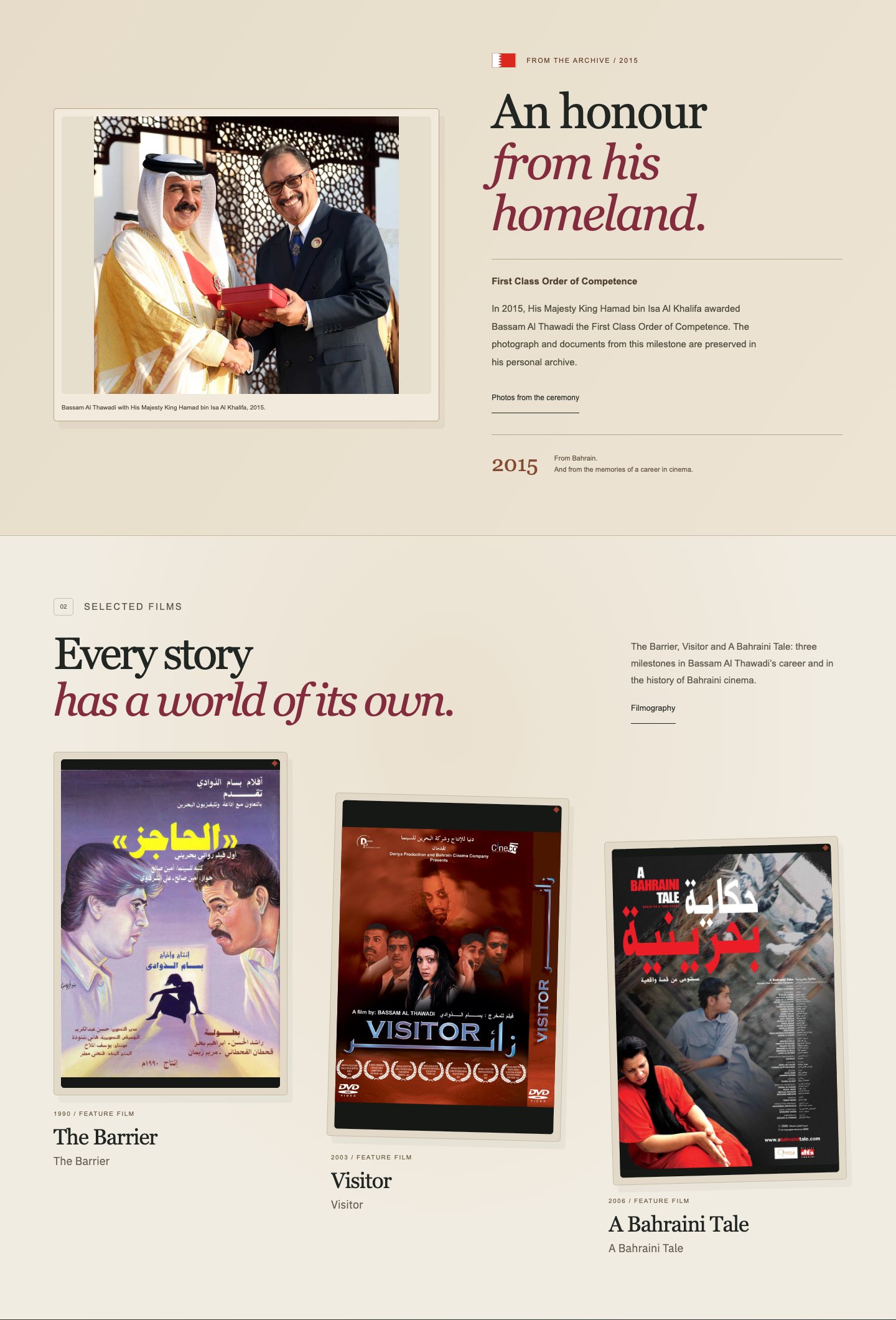
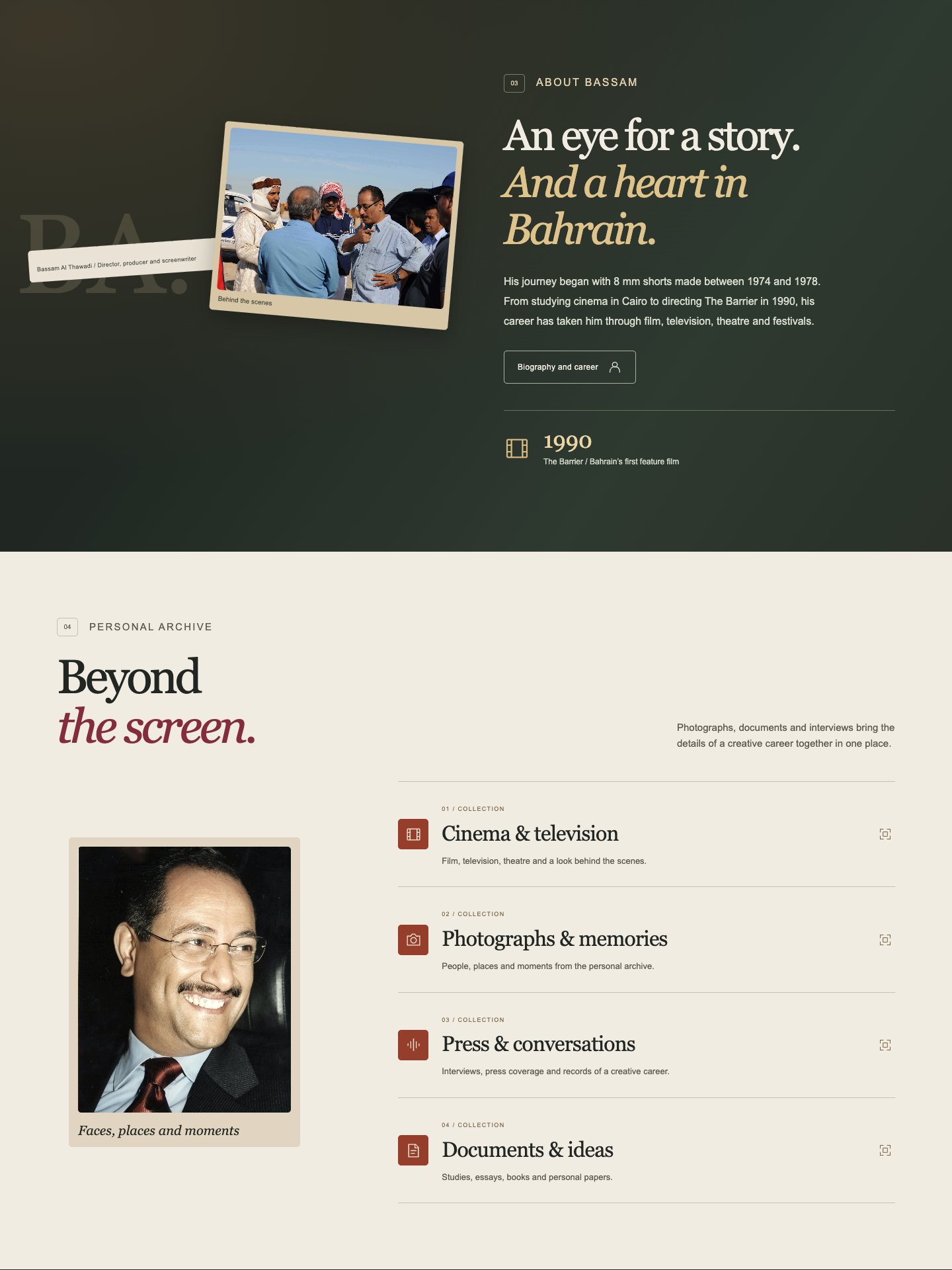
The website brings together a biography, filmography, interviews, photographs and written material. The challenge was to organise those collections so each remained distinct, while giving visitors clear routes into the wider archive.
Information architecture
Someone who knows the name of a film does not need the same entry point as a visitor discovering the director. We kept both routes visible: search for something specific, or browse the work by collection.
Film entries sit alongside the career record rather than replacing it. The career record gives a chronological view; film pages bring the title, year and available images or clips together.
Collections separate cinema and television, photographs, press and documents. Search offers a second route through the same archive for people who arrive with a title, year or topic in mind.
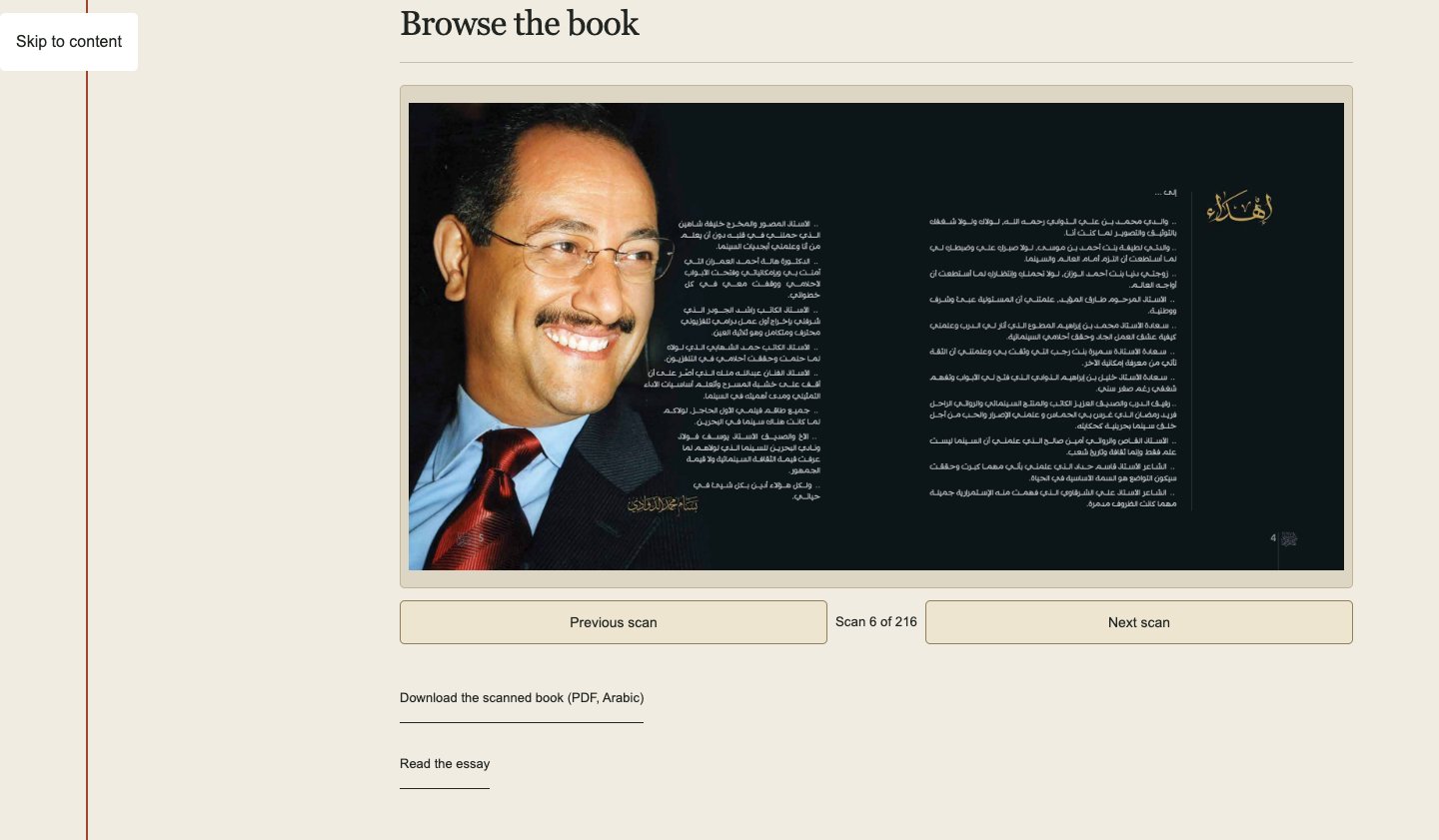
Interactive readers let visitors read available books and PDFs within the relevant page. Original source documents are not silently translated or edited; the surrounding interface is localised so readers know what they are opening.
Career record
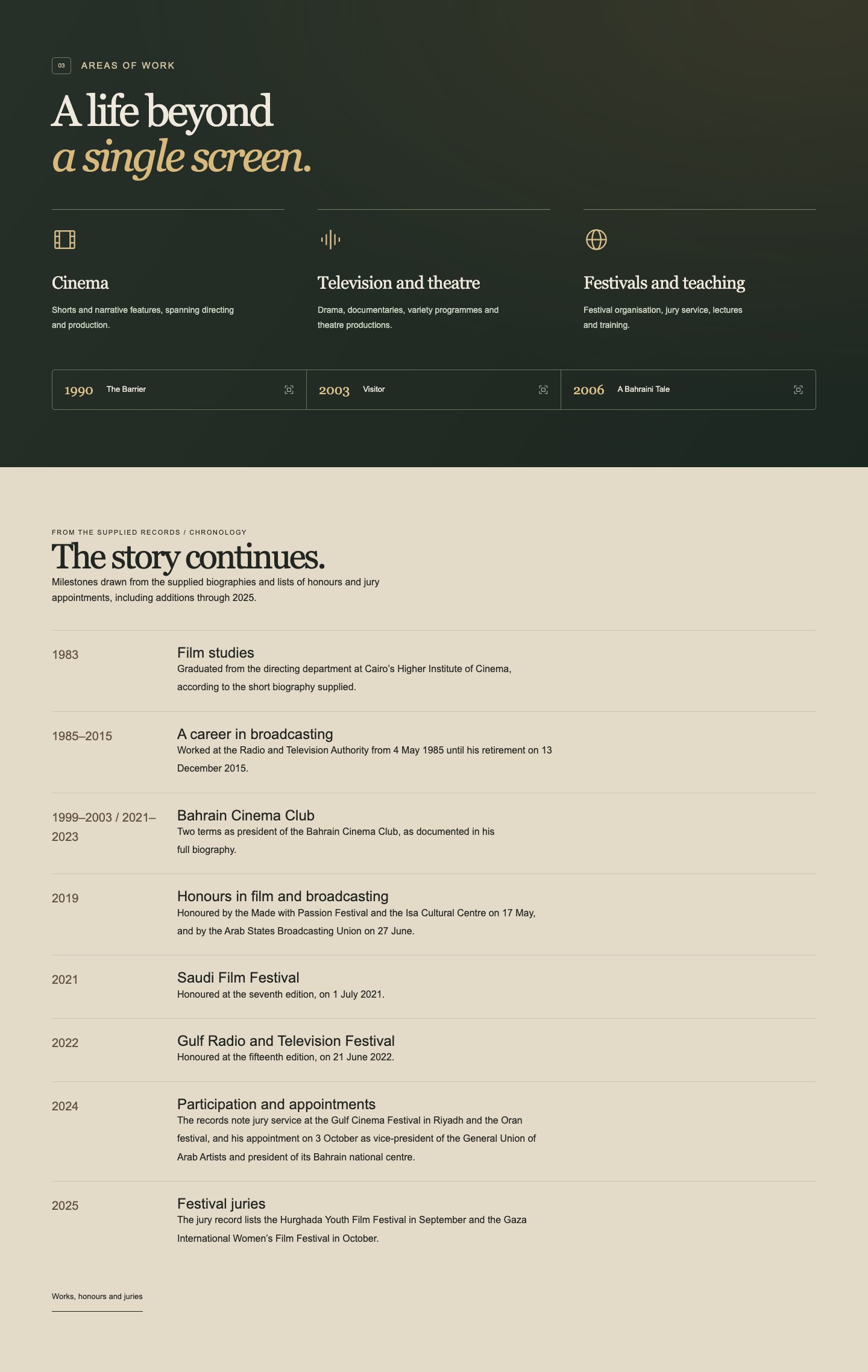
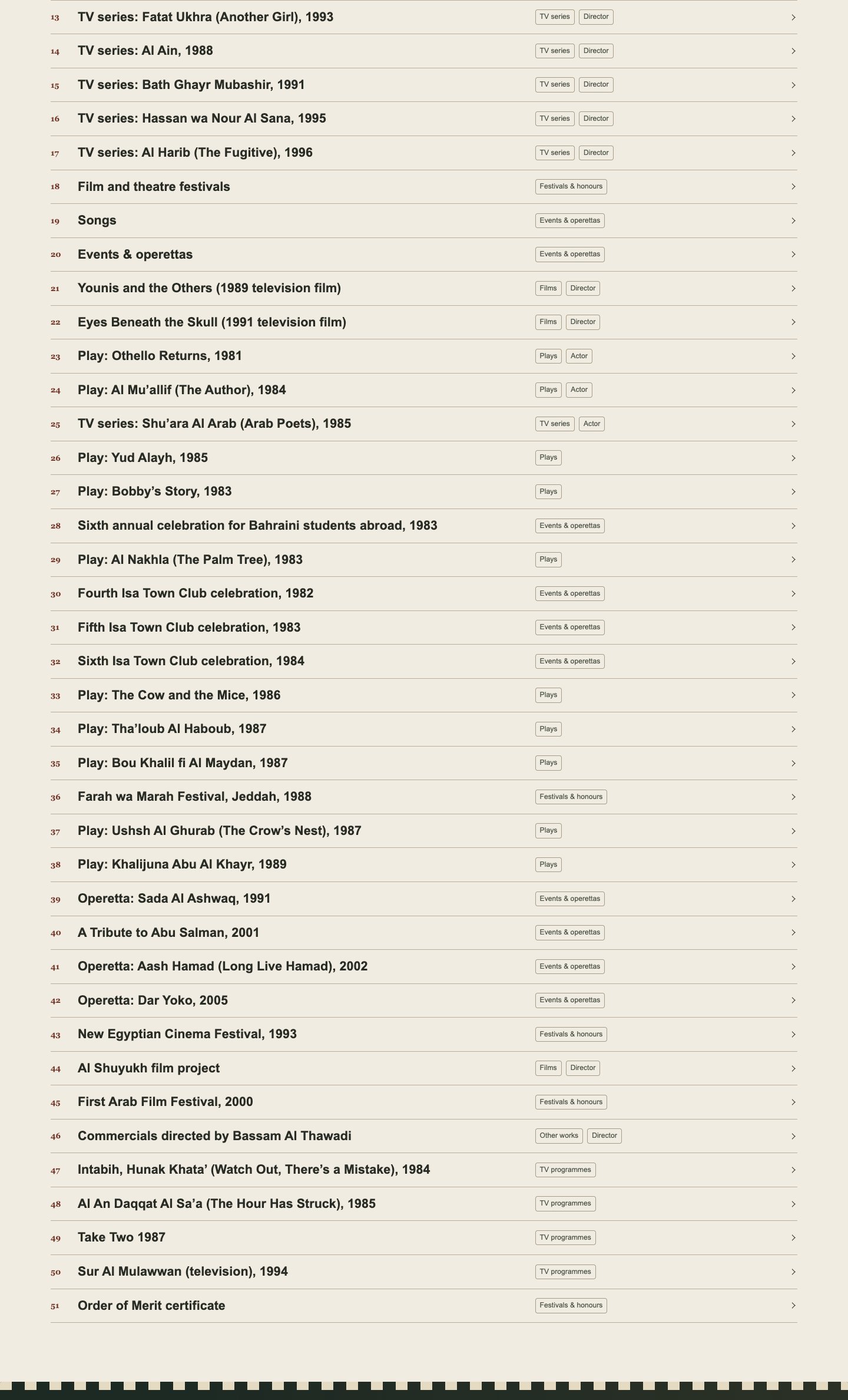
The calendar of milestones is separate from the film catalogue. Someone researching Bassam’s move from film studies to broadcasting can read in date order. Someone looking for a work can go directly to the film entry. Keeping those views separate avoids making visitors sort through every credit just to understand the career.
Film detail
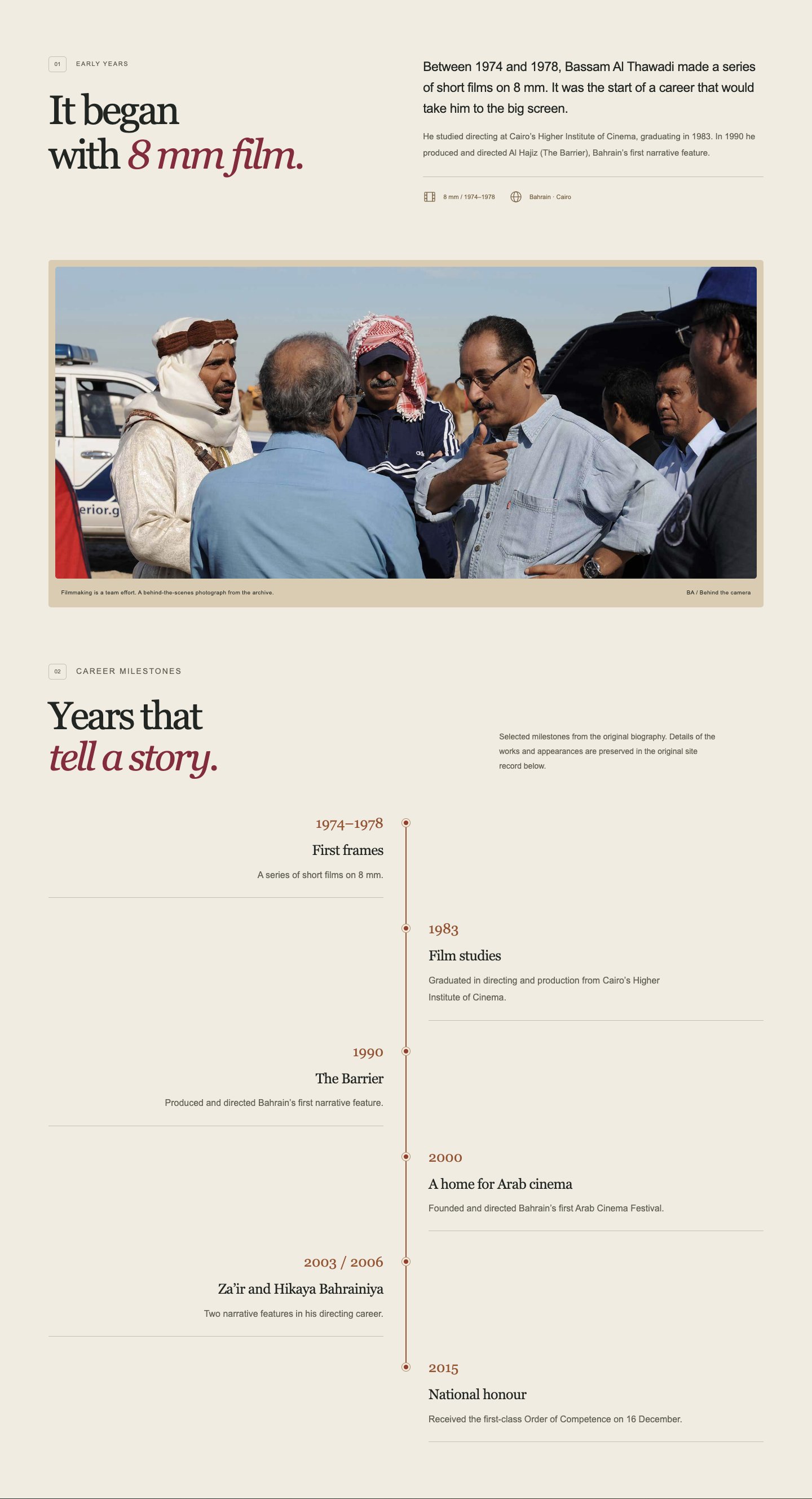
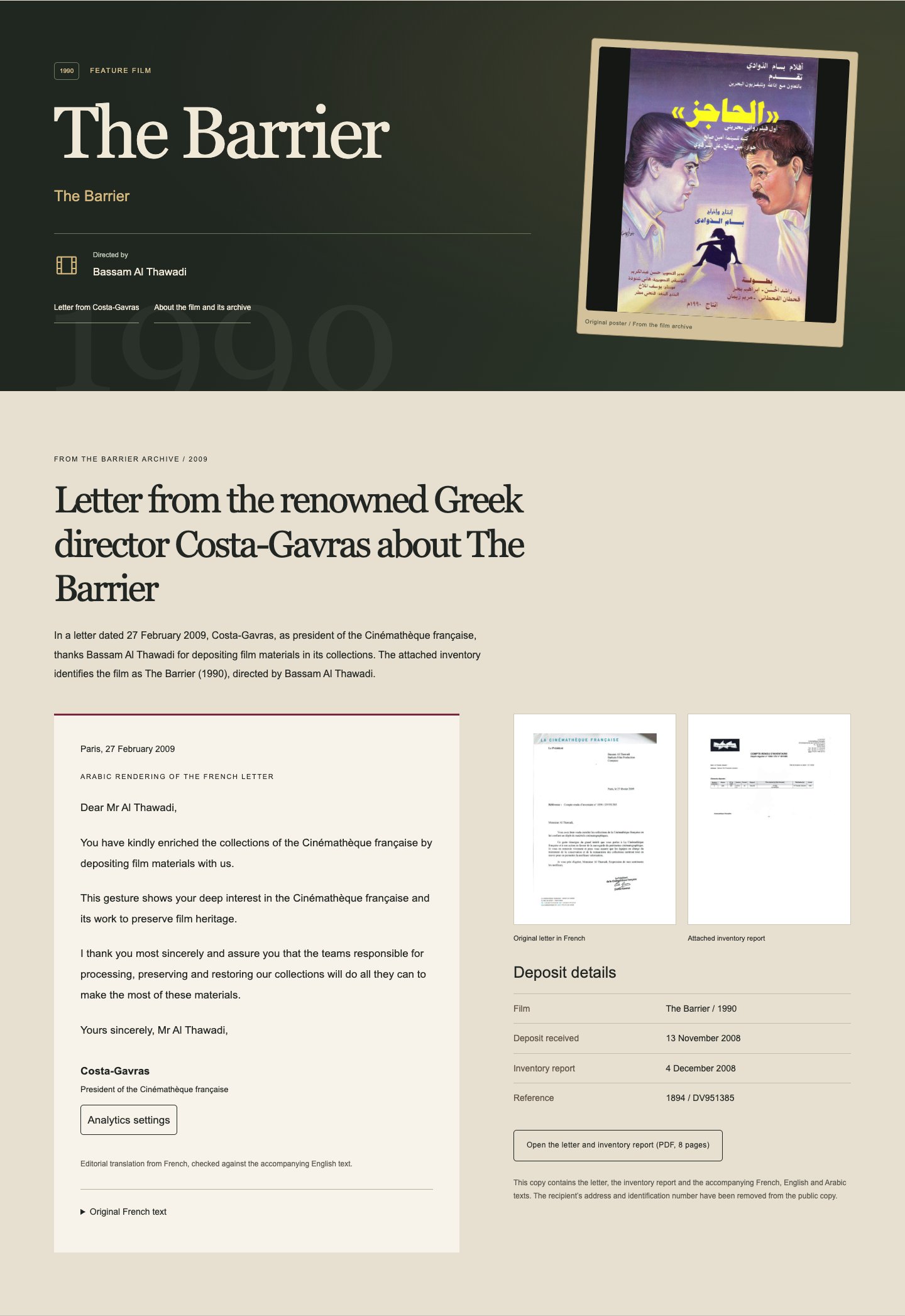
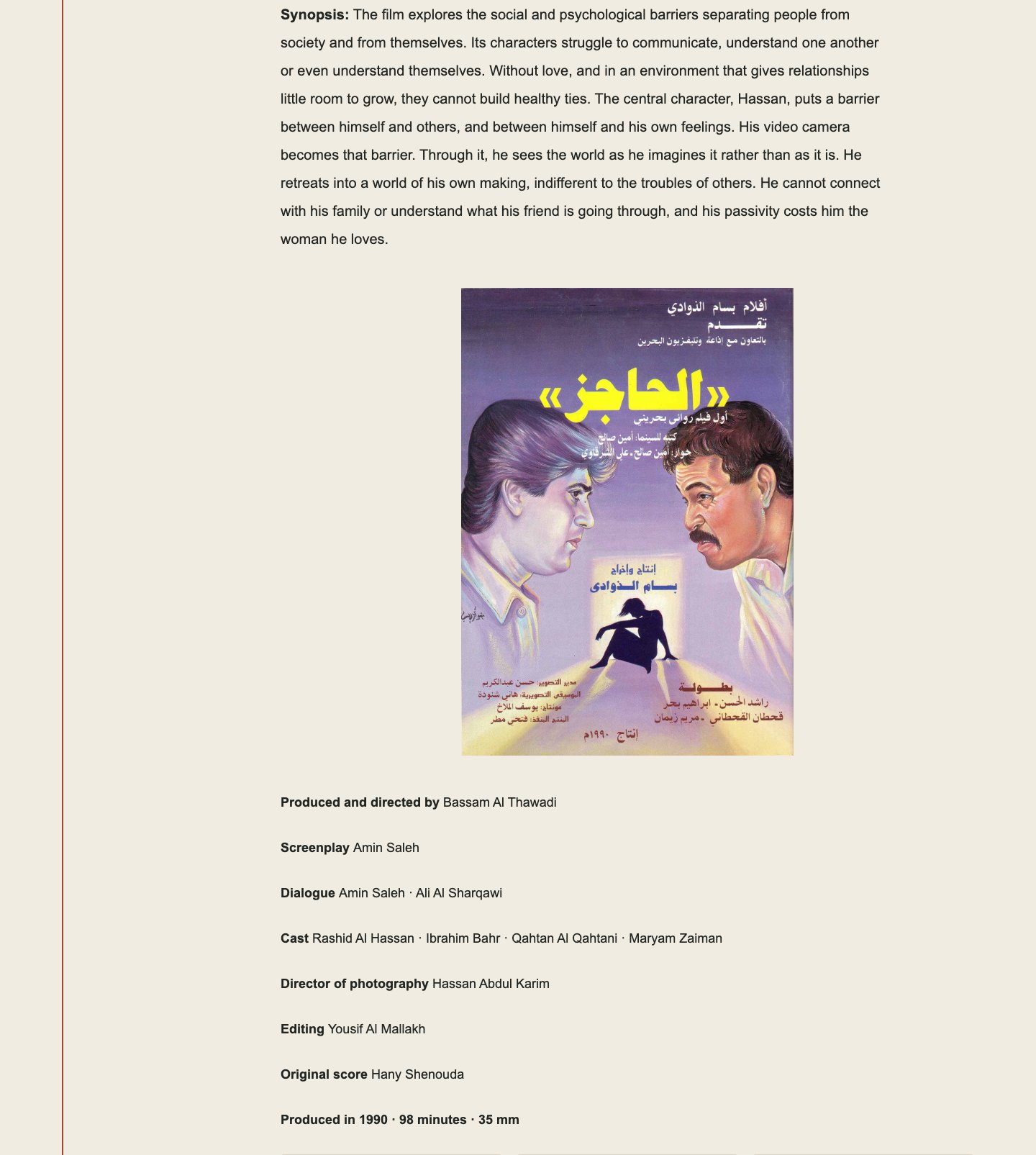
The Barrier’s record pairs its 1990 poster and directing credit with a synopsis, production credits and a letter from Costa-Gavras. The letter and inventory sit with the title they describe. A reader can understand the film first, then move into the preservation record without searching a separate documents collection.
Archive in use
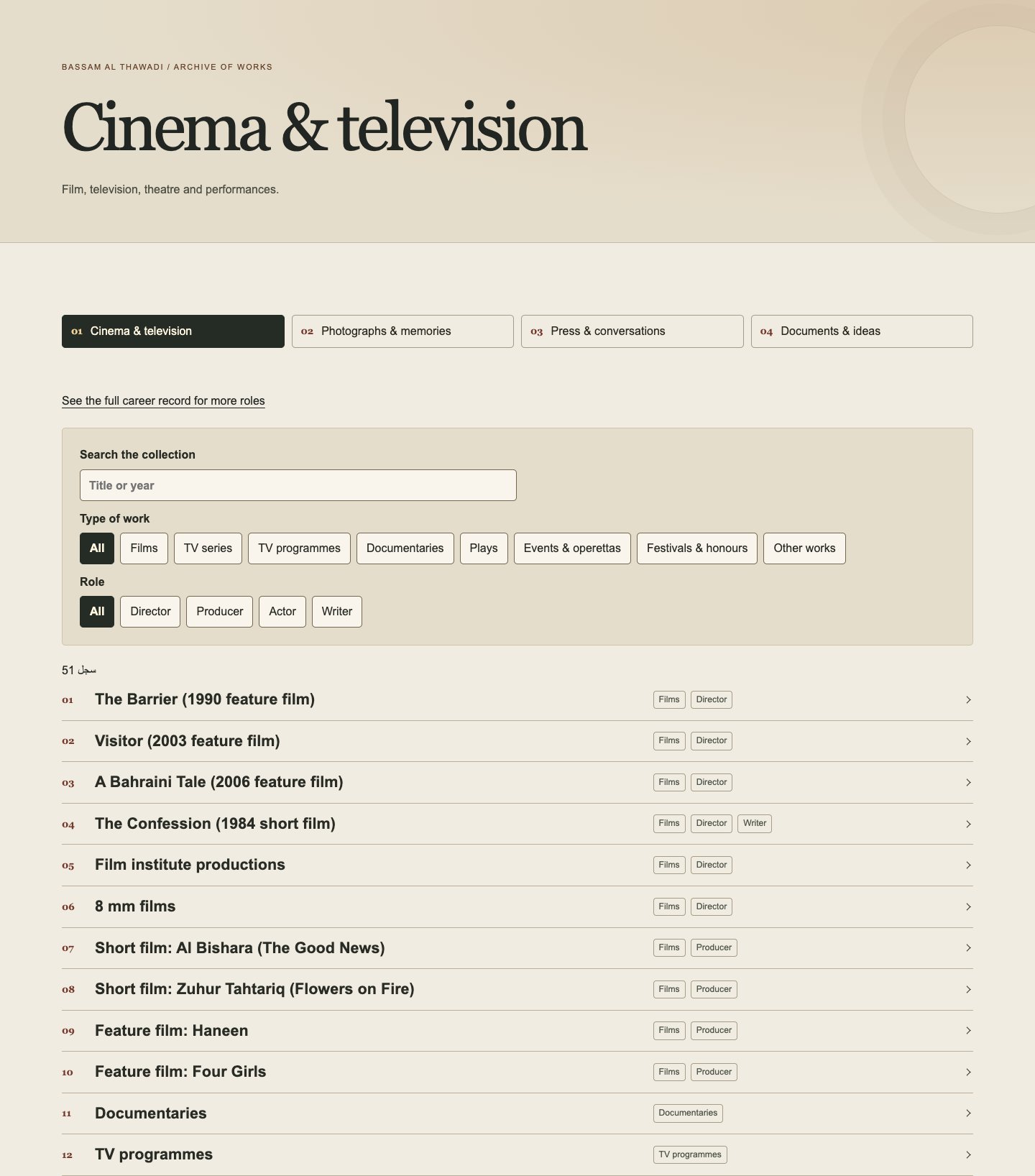
Collection landings tell visitors what each area contains. In Cinema and Television the collection can then be narrowed by format and credited role. A listing keeps its title, date and category rather than asking readers to identify it from a thumbnail.
Books and source material
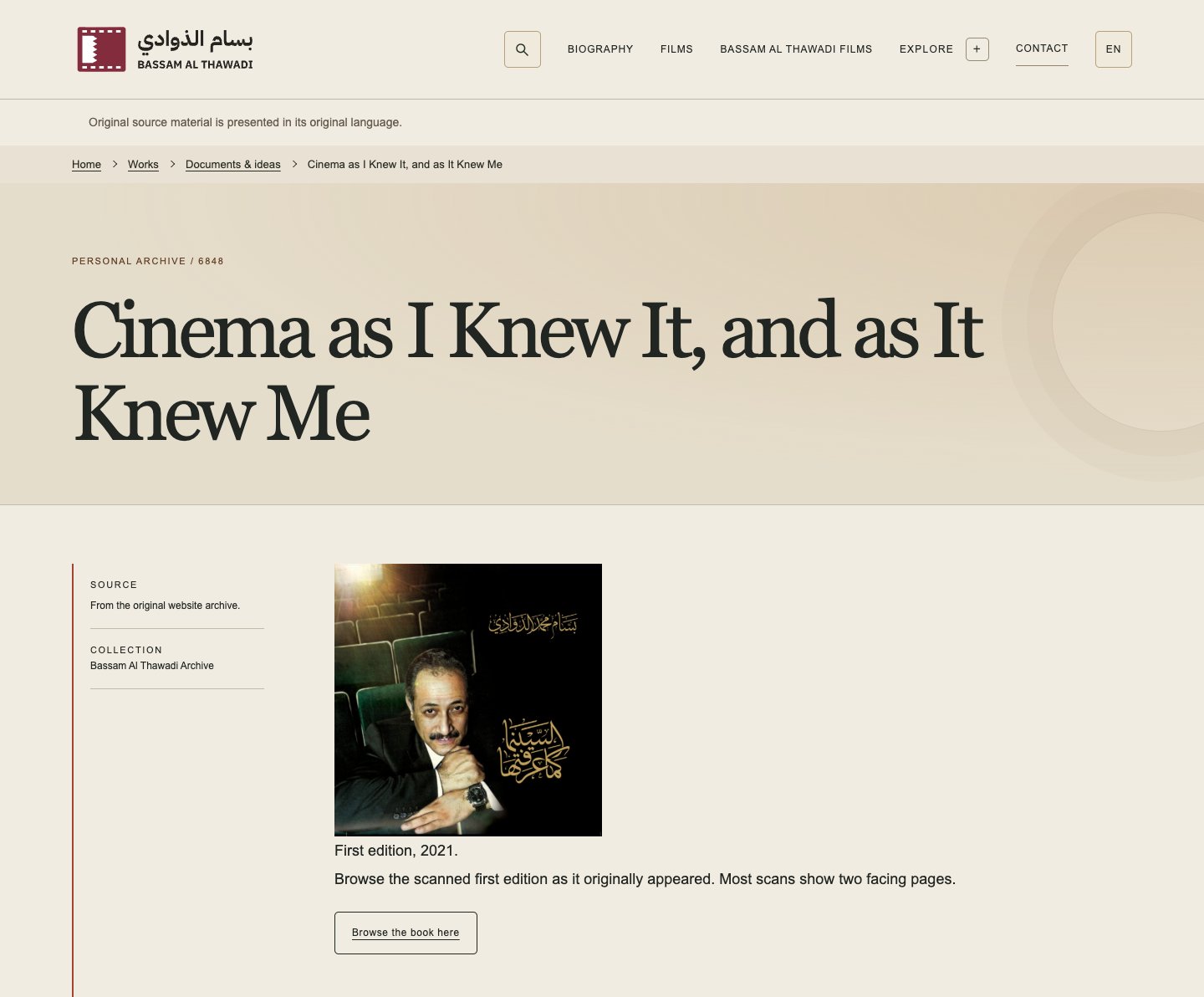
Cinema as I Knew It and as It Knew Me can be browsed in its own page. The reader presents pages of the original edition alongside a clear title and edition context. A researcher who wants to consult the source can do so without mistaking the surrounding translated interface for a translation of the book.
Find a title in context
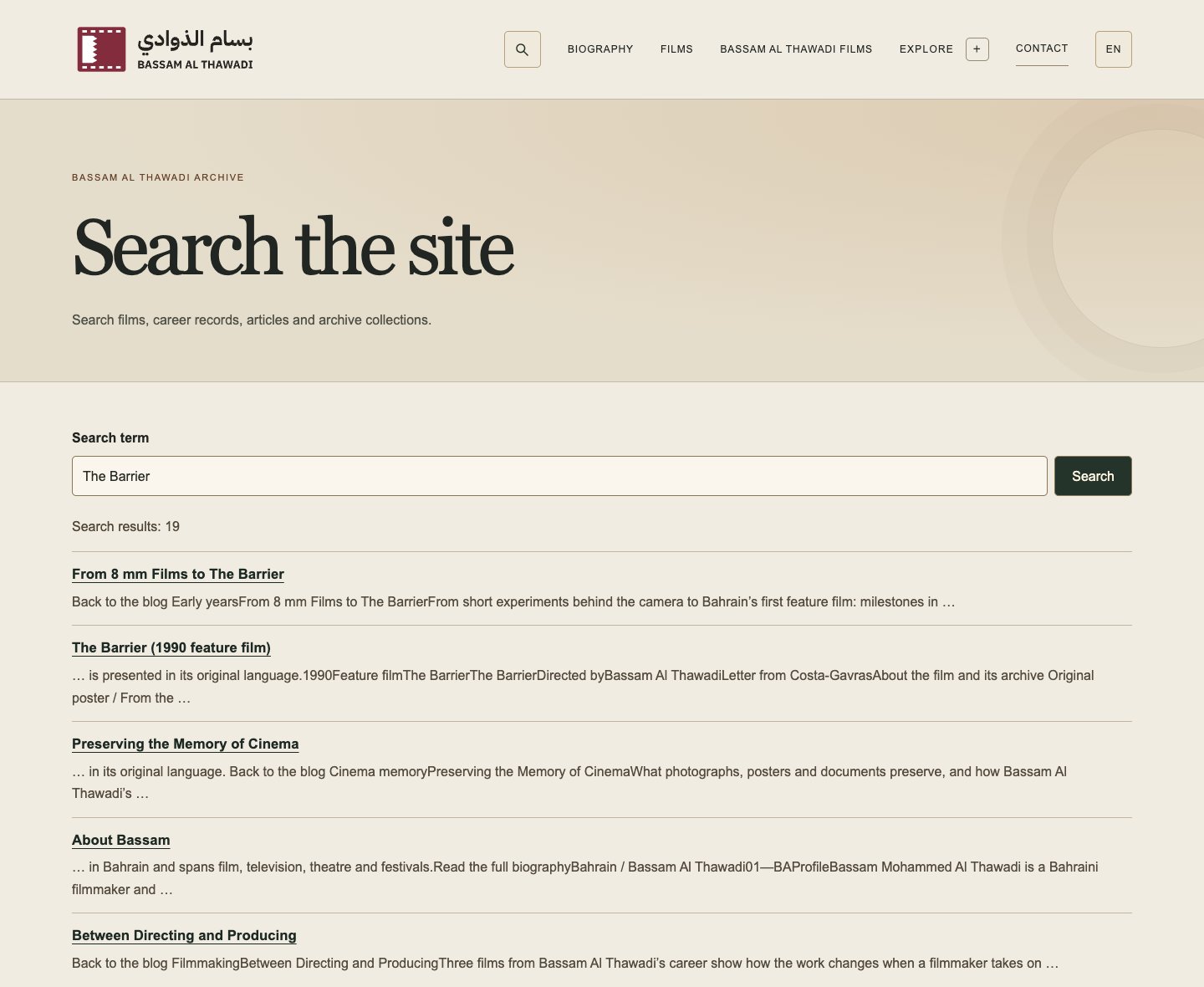
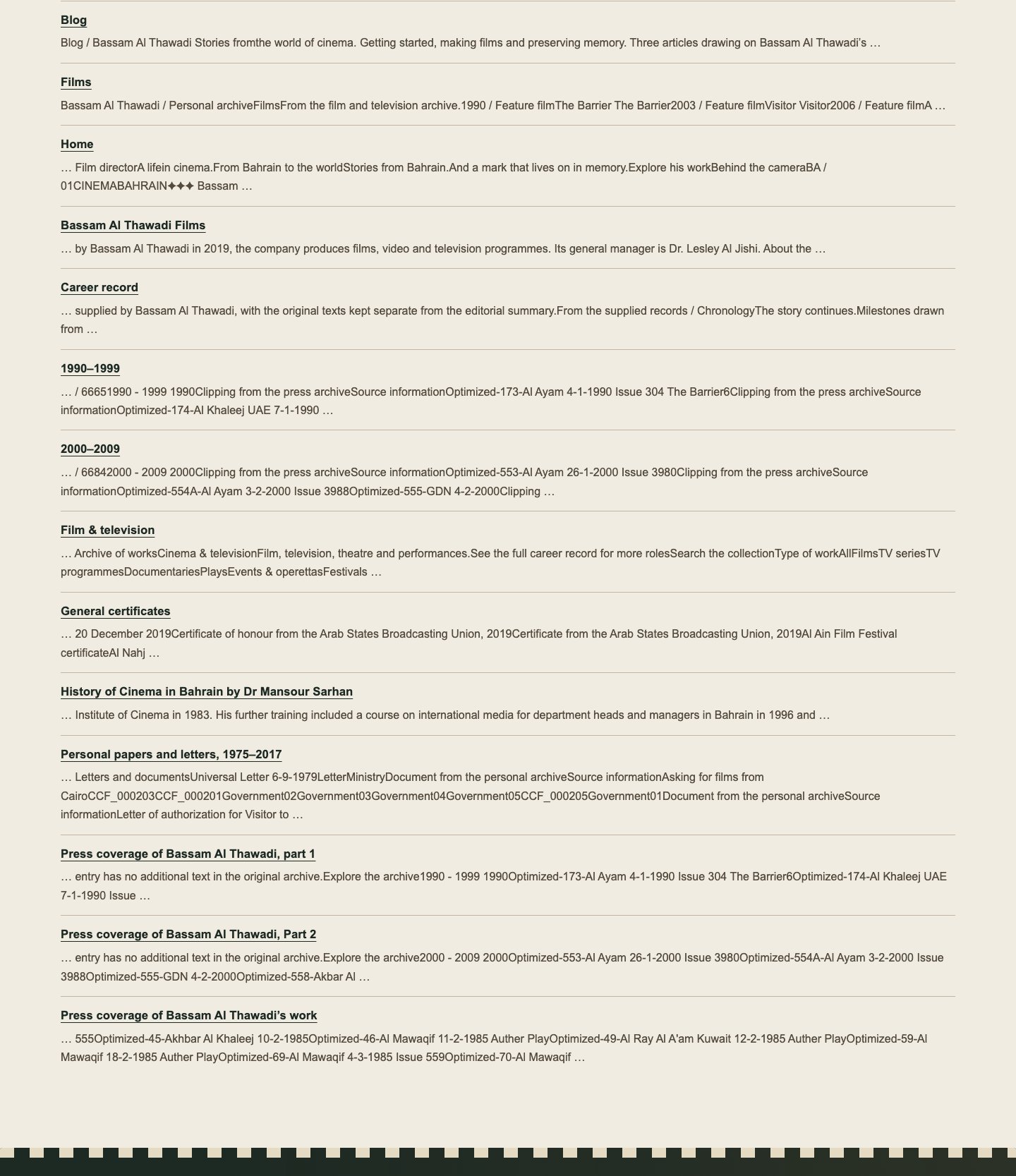
An archive is easier to use when visitors do not need to know how it is filed. A search for The Barrier shows the film record, related writing and preservation material as separate results. Each result has context, so readers can choose between the film itself and writing about it.
Moving-image archive
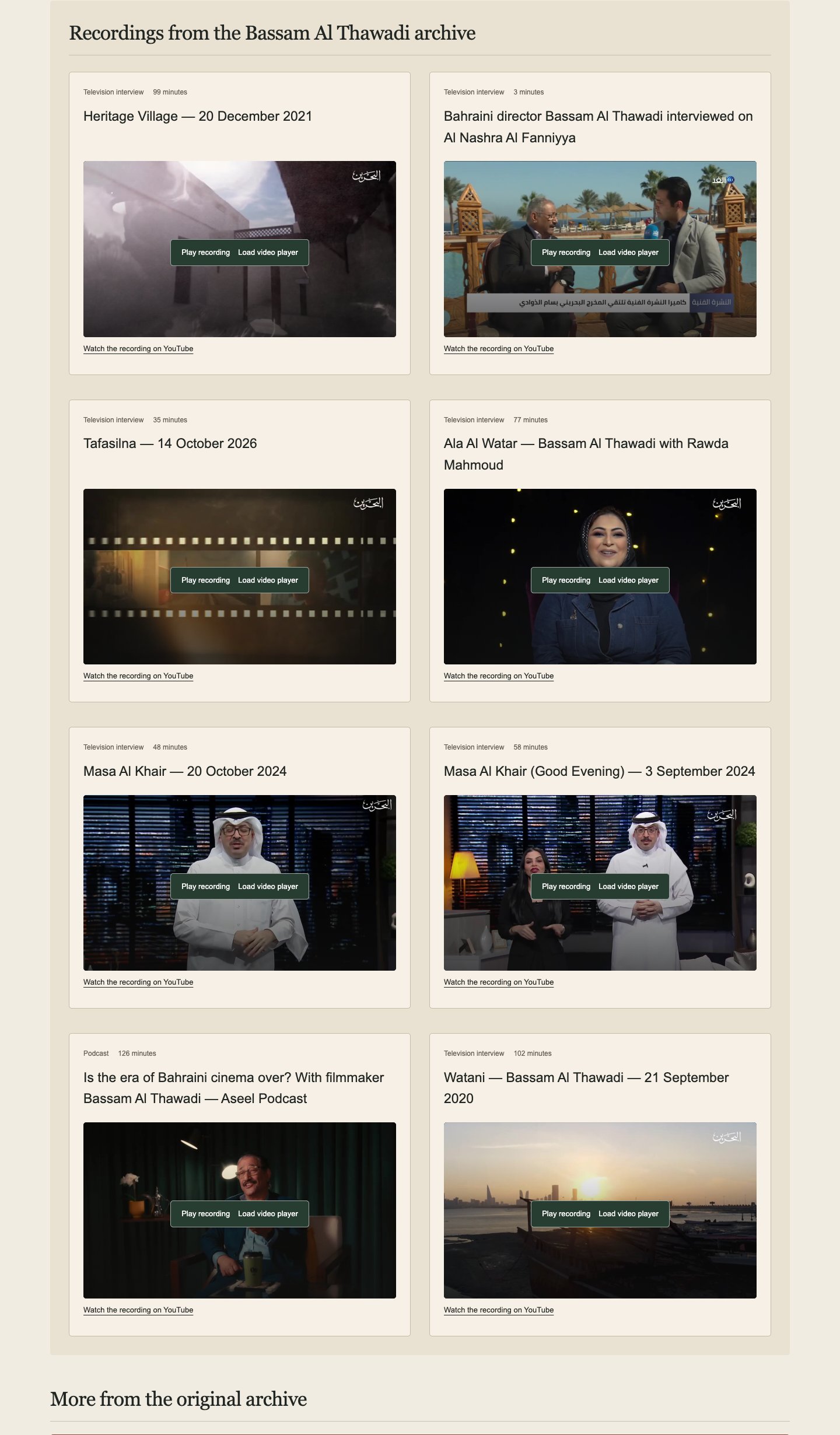
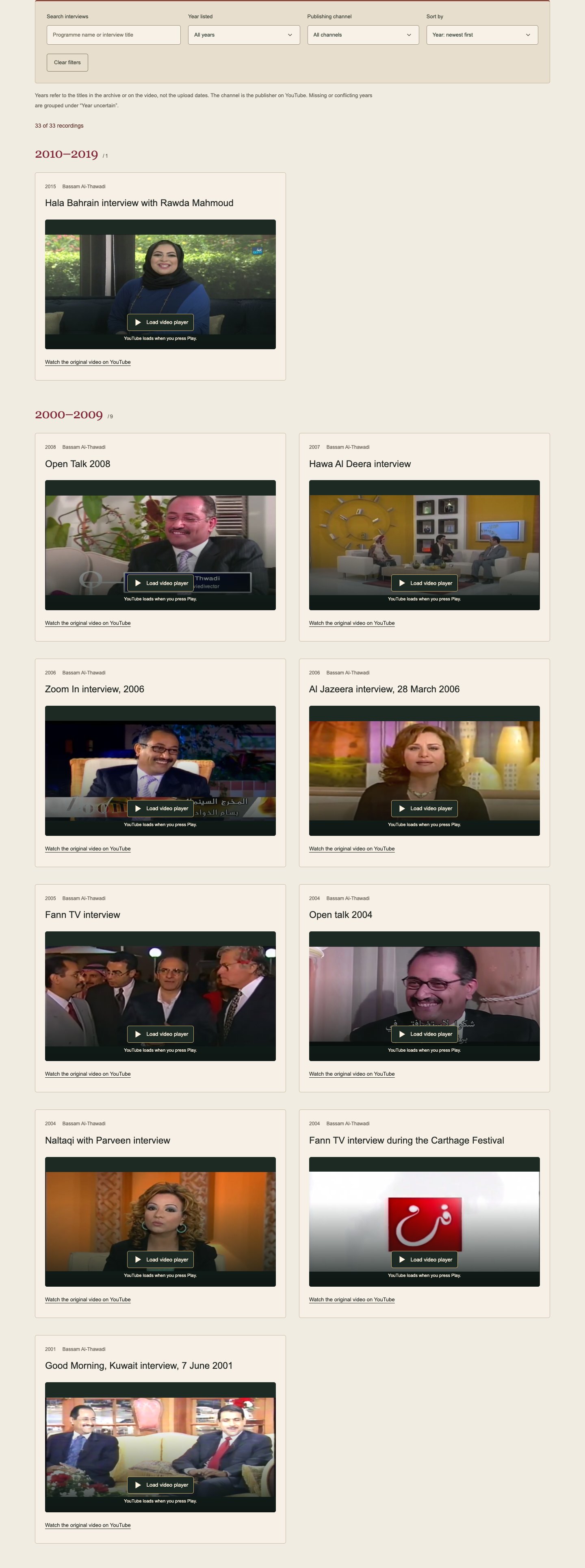
The interviews page brings a featured episode of Oral History of the Arab Screen into the archive and gives it the programme title and a source link. Farther down, the collection lets visitors narrow browsing by a known year or search the entries. A recording stays identifiable even when a visitor chooses not to load the player.
Responsive layouts
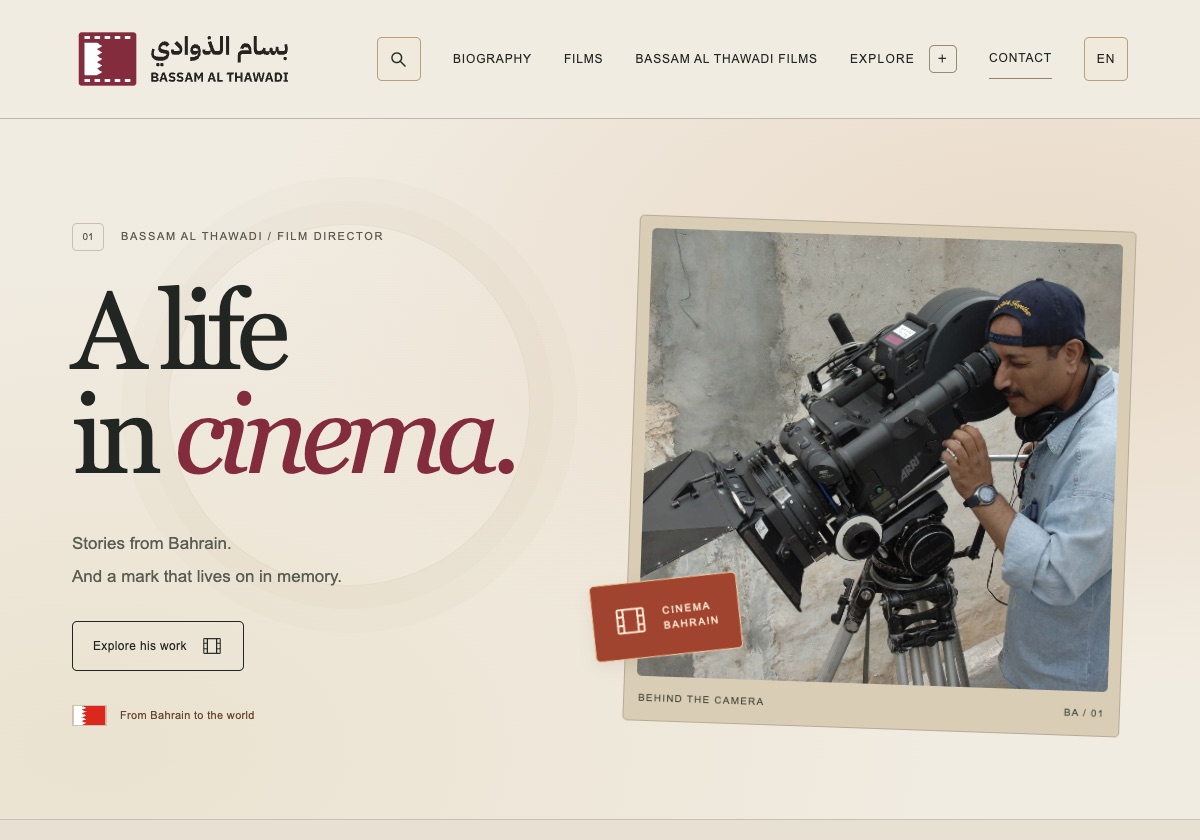
The homepage moves from a wide story-and-image layout to a single-column reading order on phones. Navigation remains available without a desktop menu, and the narrower view keeps the main entry points in reach.
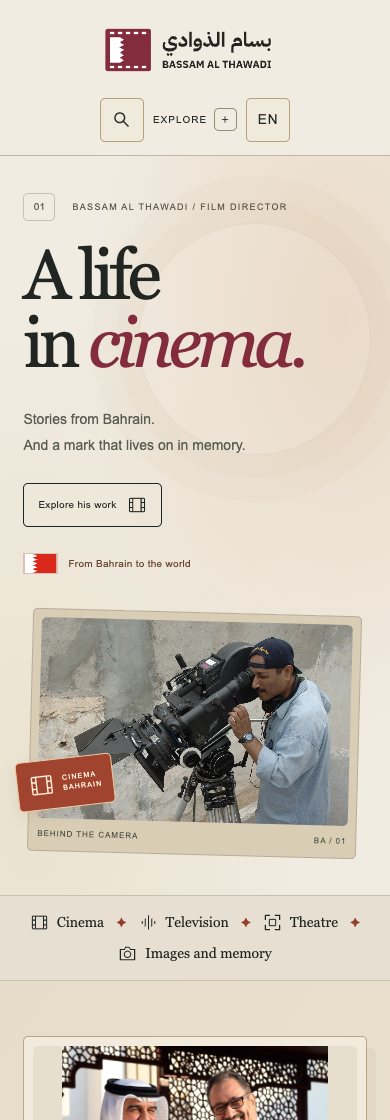
Three editions
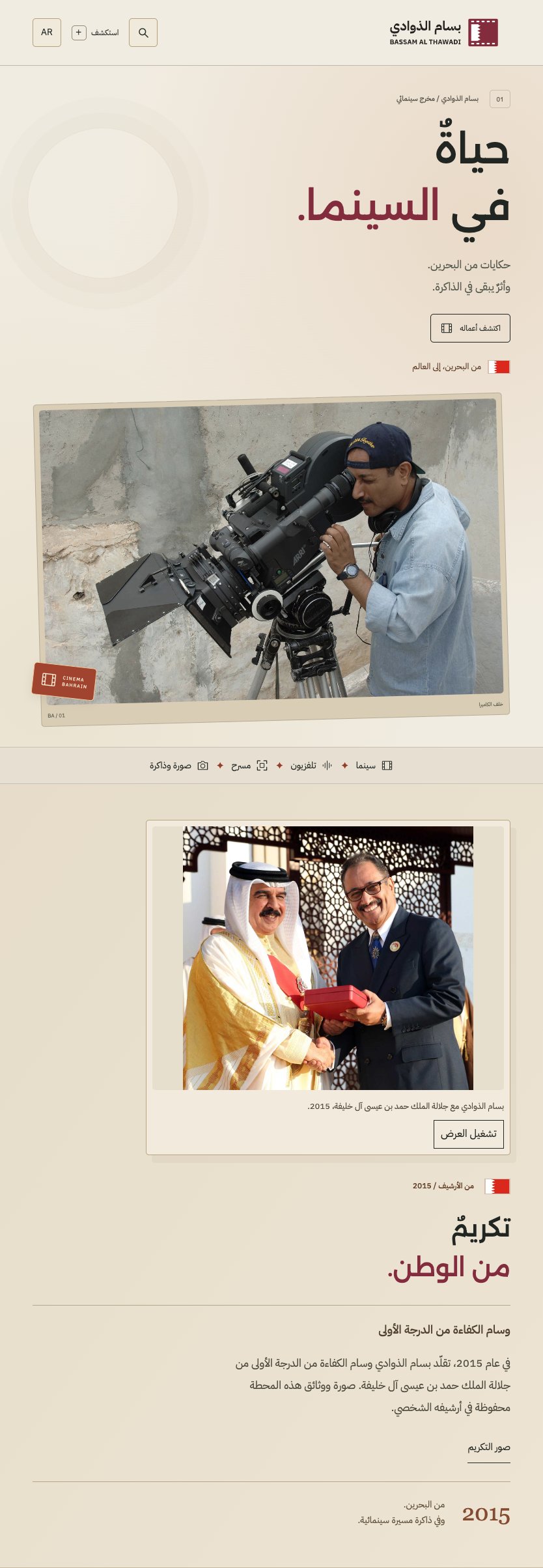
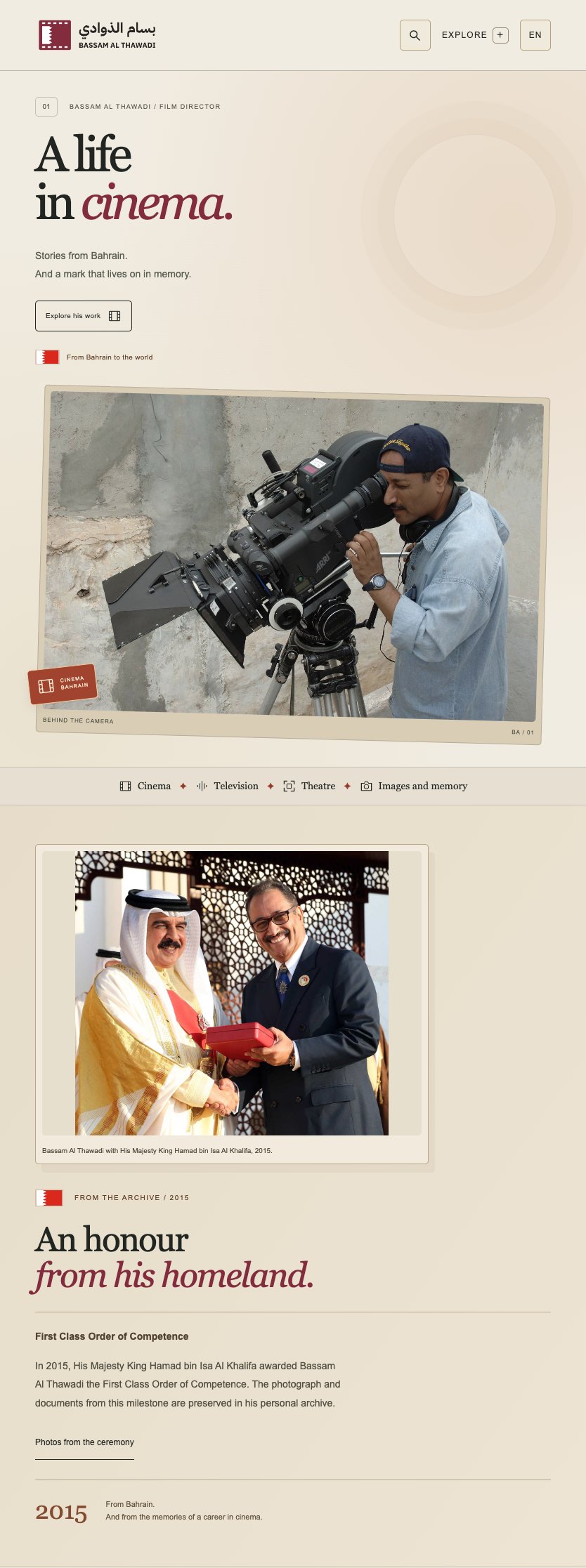
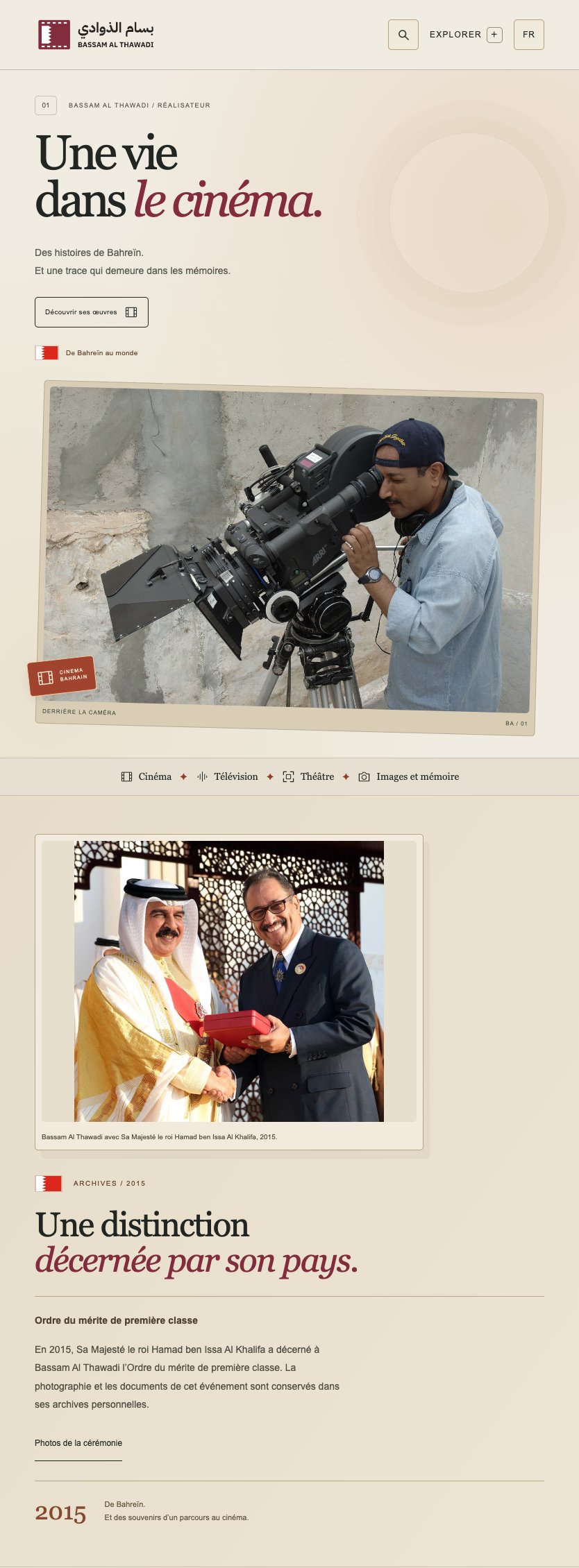
The three editions share the same collections and page structure, with localised headings, navigation and metadata. Arabic reads right to left; English and French read left to right. Original archive documents retain their source language.
Arabic, right to left
English, left to right
French, left to right
Launch verification
These checks document the live release and controlled lab runs, not rankings or visitor outcomes.
Lighthouse 12.8.2 lab tests of the Arabic homepage on 19 November 2026. These are automated checks of one page, not real-user field data or sitewide results.
Across all six runs on the Arabic, English and French homepages, automated Accessibility, Best Practices and SEO each scored 100. Performance (mobile, then desktop): Arabic 96 and 94; English 84 and 96; French 96 and 98.


Independent browsable entry points for a visitor who knows a film title, and for someone discovering the director’s work for the first time.